
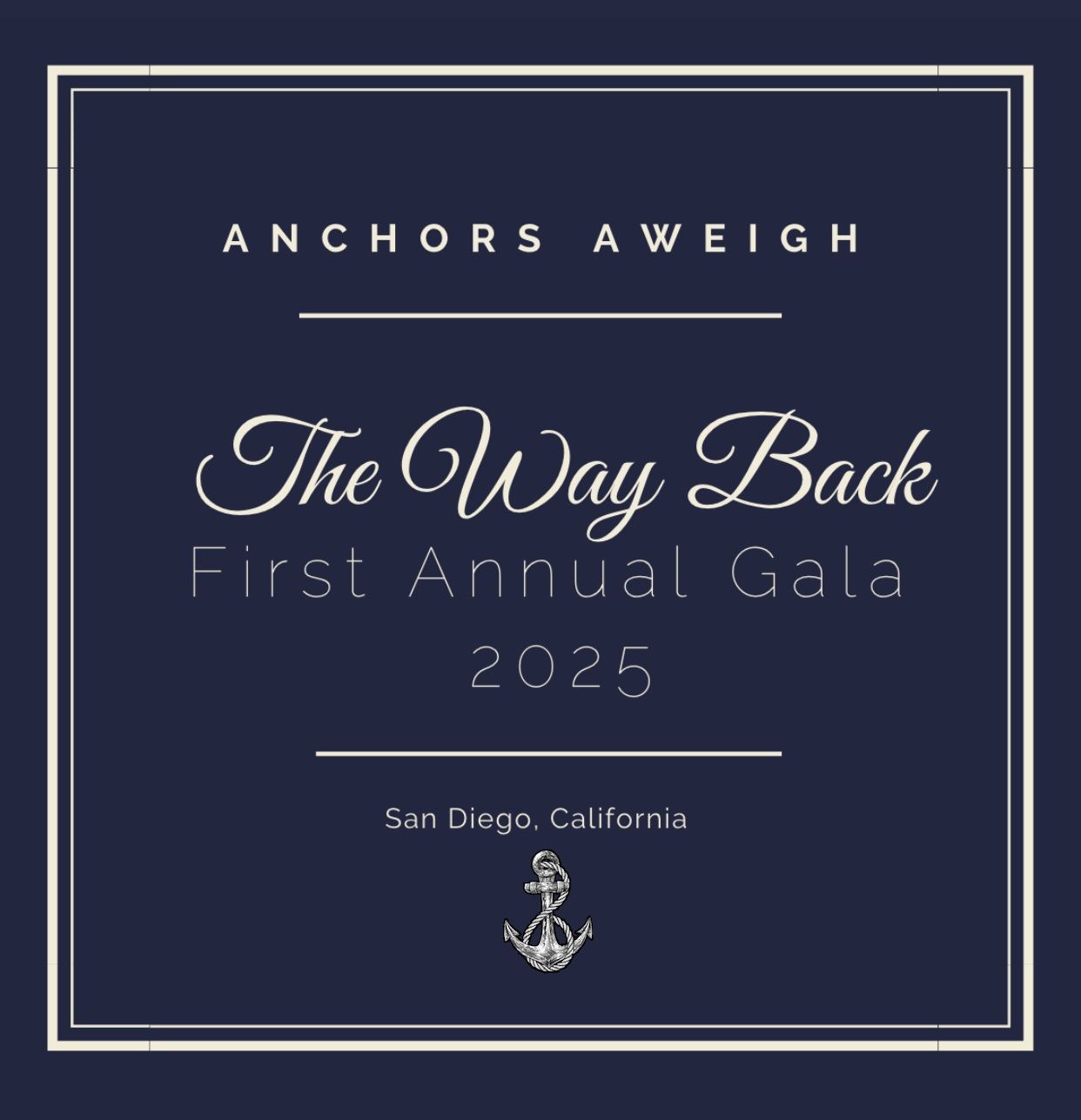
It’s time to set sail for The Way Back Annual Gala 2025
Anchors Aweigh!
Saturday October 4th, 2025
Marina Village
5:00pm - 8:00pm
Is an evidence-based, manualized approach that prepares people for long-term engagement with mutual-help fellowships such as Alcoholics Anonymous (AA), Narcotics Anonymous (NA), Cocaine Anonymous (CA), and SMART Recovery’s 12-step–oriented offshoots. Rooted in Project MATCH research, TSF focuses on three core tasks:
Twelve-Step Facilitation at The Way Back isn’t an optional add-on; it’s a living spine running through detox, residential treatment, and aftercare—linking every client to a lifelong, cost-free recovery community.
Is a cognitive-behavioral framework that equips people in recovery to anticipate and manage the “high-risk situations” that most often lead back to substance use. Core elements include (1) accurately identifying external triggers and internal cues, (2) building practical coping skills (urge-surfing, refusal skills, emotion-regulation, problem-solving), (3) strengthening self-efficacy through rehearsal and positive reinforcement, and (4) developing a balanced, values-based lifestyle that supports long-term recovery. RP treats a lapse as a learning moment rather than a failure, helping clients re-enter their plan quickly and avoid the “abstinence-violation effect.”
Relapse Prevention at The Way Back is a living thread that starts on admission, tightens through skills practice and peer modeling, and stays with clients long after they graduate—one reason our graduates leave housed, employed, and confident in their ability to stay sober.
Is a framework that recognizes how past adversity—physical, emotional, or systemic—shapes a person’s beliefs, behavior, and physiology. Guided by SAMHSA’s six principles (physical & emotional safety, trustworthiness & transparency, peer support, collaboration, empowerment & choice, cultural-historical-gender humility), TIC shifts the clinical question from “What’s wrong with you?” to “What has happened to you—and how has it impacted you?” Core practices at The Way Back include: (1) universal screening for trauma exposure and symptoms; (2) staff-wide training on regulation, grounding, and de-escalation; (3) creating a predictable, voice-rich environment that avoids re-enactment of power imbalances; (4) integrating evidence-based trauma therapies (EMDR, Seeking Safety) when clinically indicated; and (5) routinely soliciting client feedback to refine policies, spaces, and language.
Trauma-Informed Care at The Way Back is not a discrete service line, but rather the lens through which every policy, interaction, and environment is created, allowing clients to heal in a space that understands the impact of trauma while fostering safety, choice, and empowerment.
Intake Line: (619) 703-6332
Office: (619) 235-0592
Access & Crisis Line (SD): 1-888-724-7240
2516 A St. San Diego, CA 92102
Made possible by Avenir Thinking